Skip to content
  • Key Stage 1 2026-27

    The Great Fire of London

    Knowledge Organiser for Years 1 and 2, Autumn Term (Even Year) 2026-27

    Our key questionWhy was the Great Fire of London a significant event and how did it change the city and the lives of the people who lived there?

    In 1666, London was a busy city full of wooden houses squashed close together. Early one Sunday morning in September, a fire started in a bakery on Pudding Lane. It burned for four days and destroyed most of the city. This term we find out what happened, why the fire spread so quickly, how we know about it, and how London was rebuilt. We also explore London today, the four countries of the United Kingdom and the materials that buildings are made from.

    What we will know and remember

    History: The Great Fire of London

    Autumn 1 and 2

    1. To know when and where the Great Fire began (London, 1666, Pudding Lane) and how life then differed from today.
    2. To know how to sequence the key events of the fire on a timeline, using simple historical vocabulary.
    3. To know why the fire spread so fast and burned so long (wooden houses, weather, weak firefighting).
    4. To know how we find out what happened, using historical sources such as Samuel Pepys' diary (Thomas Farriner).
    5. To know how London and society changed after the fire, and why it is significant (rebuilding; Christopher Wren).
    Geography: Our Capital City - London

    Autumn 2

    1. To know where London is on a world map and UK map (capital of England and the UK).
    2. To know the four countries of the UK and their capital cities.
    3. To know London's human and physical features and landmarks (Thames, Tower Bridge, Buckingham Palace, Houses of Parliament).
    4. To know the four compass points (N, S, E, W) and use directional language on a map.
    5. To know how life in London compares with our own local area.

    Four days of fire: September 1666

    Sunday 2ndIt beginsAround 1am, a fire starts in Thomas Farriner's bakery on Pudding Lane.
    Monday 3rdIt spreadsA strong wind blows the flames from house to house. People flee with their belongings.
    Tuesday 4thSt Paul's burnsThe fire is at its worst. Old St Paul's Cathedral is destroyed.
    Wednesday 5thFirebreaksThe wind drops. Houses are pulled down or blown up with gunpowder to make gaps the fire cannot cross.
    Thursday 6thThe fire is outThe last flames are put out. Much of London lies in ashes.

    Where did it happen?

    Pudding LaneLondon BridgeSt Paul'sTower of LondonRiver ThamesArea destroyedCity wallN
    Sketch map of the City of London in 1666. Not to scale.

    The fire in numbers

    4days of burning
    13,200houses destroyed
    87churches burned, including St Paul's
    70,000people lost their homes

    Numbers are the ones most historians use.

    Why did the fire spread so fast?

    Wooden housesBuilt close together, with tar and straw
    Hot, dry summerEverything was very dry
    Strong windBlew sparks from roof to roof
    WarehousesFull of oil, coal and wood

    Fighting fires: then and now

    1666

    Leather buckets
    Water squirts
    Fire hooks

    Today

    Fire engines and hoses
    Call 999

    How do we know, and what changed?

    How do we know?

    • Samuel Pepys wrote a diary. He described the fire and even buried his cheese and wine in his garden to keep them safe!
    • John Evelyn also wrote a diary about the fire.
    • Paintings, maps and records from the time help us too.
    61 metres
    The Monument stands 61 metres from where the fire began.

    A new London

    Before: woodAfter: brick and stone
    • New houses were built from brick and stone, not wood.
    • Streets were made wider.
    • Christopher Wren designed a new St Paul's Cathedral and many new churches.
    • The first fire insurance and fire brigades began.

    Our capital city: London

    EdinburghCardiffBelfastLondonSCOTLANDENGLANDWALESN. IRELANDWorksopNSEW
    The United Kingdom. Stars show the capital cities.
    EnglandCapital: London
    ScotlandCapital: Edinburgh
    WalesCapital: Cardiff
    Northern IrelandCapital: Belfast

    London is the capital city of England and of the whole United Kingdom. The River Thames flows through it.

    Famous London landmarks

    • River Thames
    • Tower Bridge
    • Buckingham Palace
    • Houses of Parliament
    • St Paul's Cathedral
    • Tower of London
    LondonWorksop
    SizeA huge city with millions of peopleA town with about 45,000 people
    RiverRiver ThamesRiver Ryton and the Chesterfield Canal
    TravelUnderground trains, buses and black cabsCars, buses and trains
    BuildingsSkyscrapers, palaces and famous landmarksHouses, shops, parks and Worksop Priory

    Science: everyday materials

    An object is a thing, like a cup or a chair. A material is what it is made from, like wood or plastic. We choose materials because of their properties.

    Woodhard, strong, burns
    Metalhard, shiny, strong
    Glasstransparent, breaks
    Plasticwaterproof, light
    Fabricsoft, bendy
    Brickhard, strong, does not burn
    • hard / soft
    • bendy / stiff
    • waterproof / absorbent
    • transparent / opaque
    • shiny / dull
    • rough / smooth

    Materials: properties (Autumn 1)

    • To know how to identify, name and classify everyday materials.
    • To know how to sort materials by their simple physical properties.
    • To know the difference between an object and the material it is made from.
    • To know how to look for patterns in properties (e.g. shininess; whether it is metal).
    • To know how to choose a suitable material for a purpose (waterproof, stretchy, tough).

    Materials: design and test (Autumn 2)

    • To know how to investigate the properties of different materials.
    • To know how to use knowledge of materials to choose the best one for a job.
    • To know how to design a suitable protective covering / structure using chosen materials.
    • To know that materials are selected in design because of their properties.

    DT: Strong Room (Autumn 1)

    • To know how houses then and now compare.
    • To know how to make strong, stable structures.
    • To know how to design a room to replace one lost in the fire.
    • To know how to build a model room using chosen materials and improve it.
    • To know how to evaluate against design criteria.

    Art: Printing - Kandinsky (Autumn 2)

    • To know about the work of Wassily Kandinsky.
    • To know how to investigate colour theory and mix colours.
    • To know about abstract art through shape and colour.
    • To know how to use stencils to print a design onto fabric.

    Key vocabulary

    fire
    Heat, light and flames made when something burns.
    bakery
    A shop where bread and cakes are baked.
    Pudding Lane
    The street where the fire started.
    timeline
    A line showing events in the order they happened.
    diary
    A book where someone writes what happens each day.
    eyewitness
    Someone who saw an event happen.
    source
    Something that tells us about the past.
    firebreak
    A gap made so a fire cannot spread.
    significant
    Very important, with a big effect.
    past / present
    Long ago / now.
    capital city
    The most important city in a country.
    United Kingdom
    England, Scotland, Wales and Northern Ireland.
    landmark
    A famous building or place that is easy to recognise.
    compass
    Shows north, south, east and west.
    human feature
    Something made by people, like a bridge.
    physical feature
    Something natural, like a river.
    material
    What an object is made from.
    property
    What a material is like, such as hard or bendy.
    waterproof
    Does not let water through.
    transparent
    You can see through it.
    structure
    Something built that stands up.
    stable
    Firm and not easy to knock over.
    primary colours
    Red, yellow and blue.
    stencil
    A shape cut out to print or paint through.

    Red: history. Blue: geography. Purple: science. Green: DT. Pink: art.

    Bringing it to life

    Be a historian

    Look at pictures and diary extracts from 1666. What can they tell us?

    Map explorers

    Find London, Worksop and the four capital cities on a map of the UK.

    Material detectives

    Hunt for wood, metal, glass, plastic and fabric around school and at home.

    Talk about it at home

    Does your home have a smoke alarm? Talk about how to stay safe and when to call 999.

    Sparken Hill Academy: Excellence and Enjoyment in Education for Everyone.

    This half term, KS1 have been learning all about the Great Fire of London. We have been exploring what happened during the fire, how it changed London and what life was like in 1666.
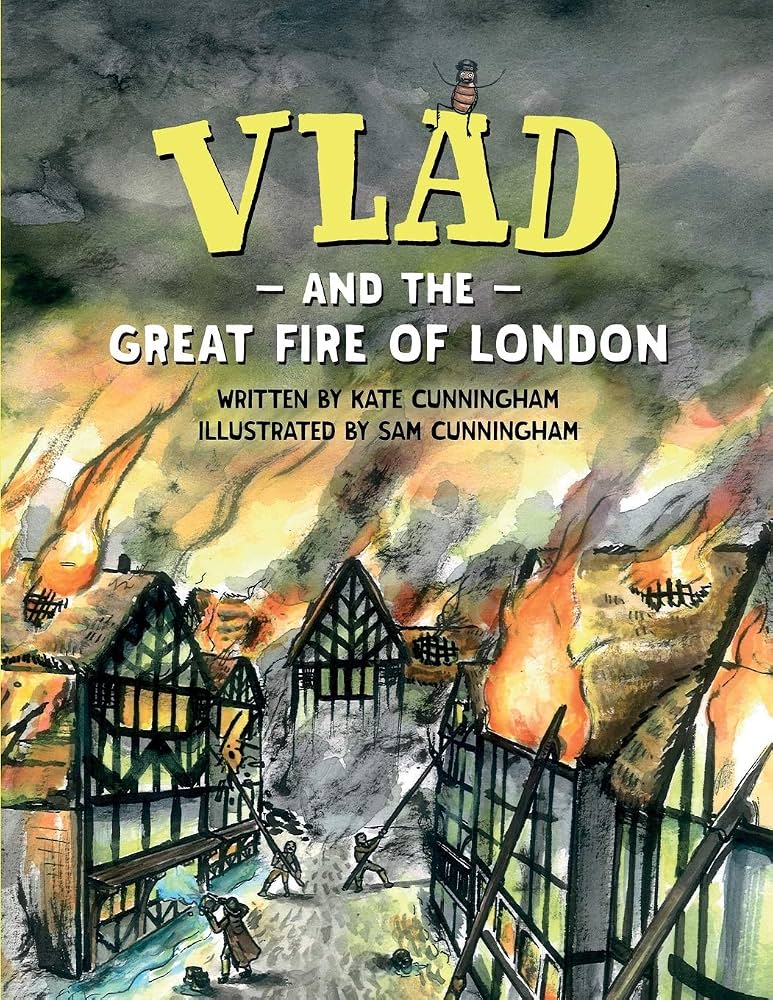
    The book above is one of the texts we have been enjoying together and has provided inspiration for many of our English lessons. Through the story, the children have developed their vocabulary, reading and writing skills while bringing this fascinating period of history to life.

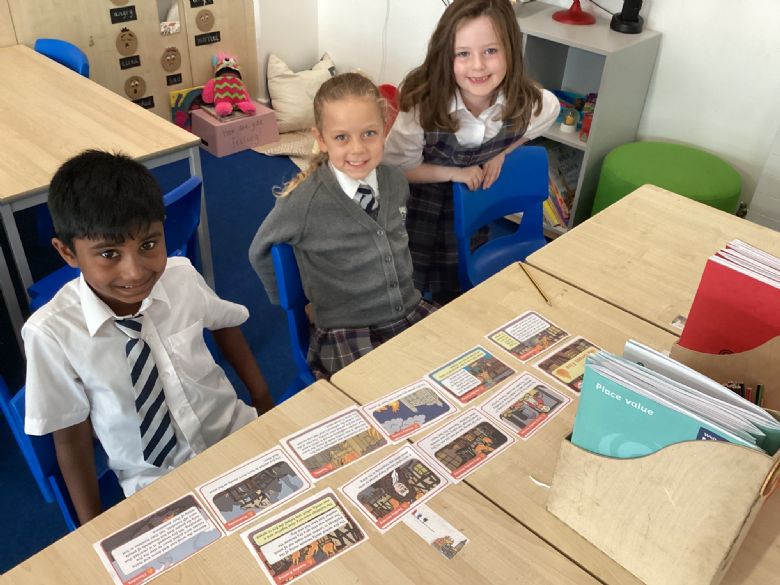
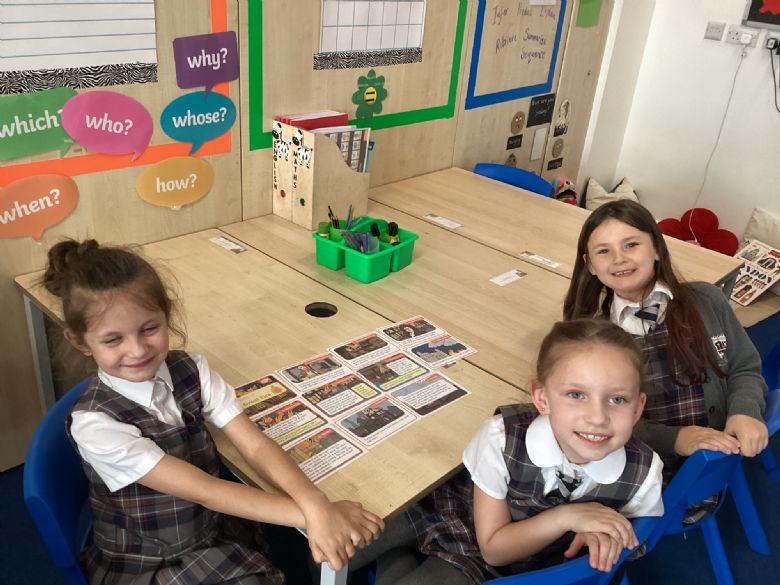
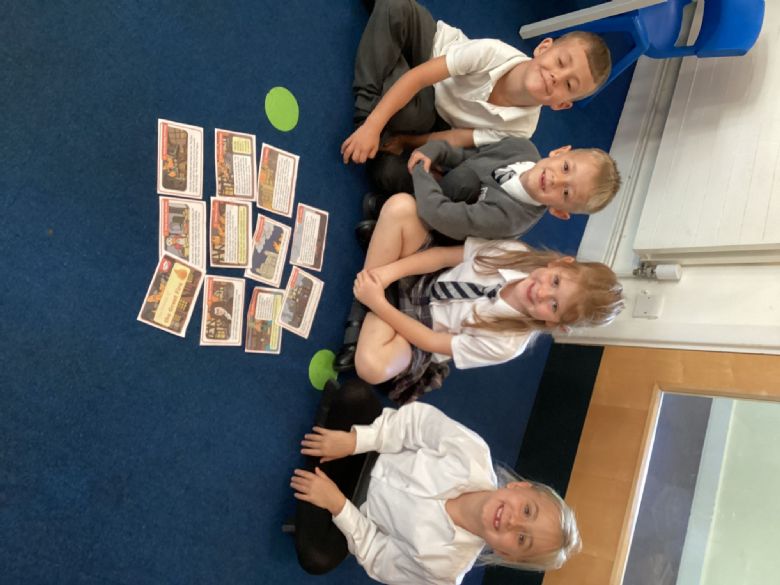
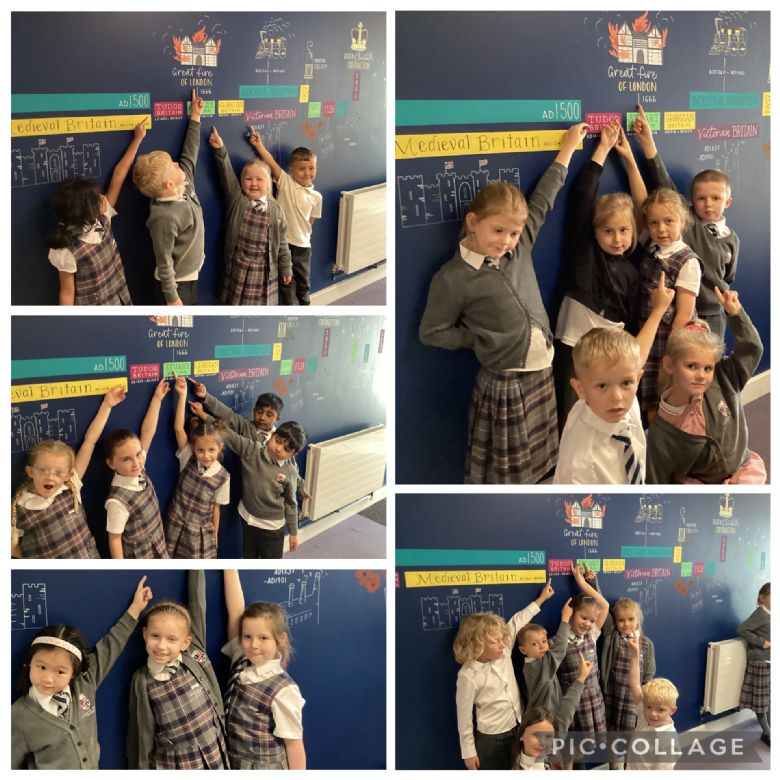
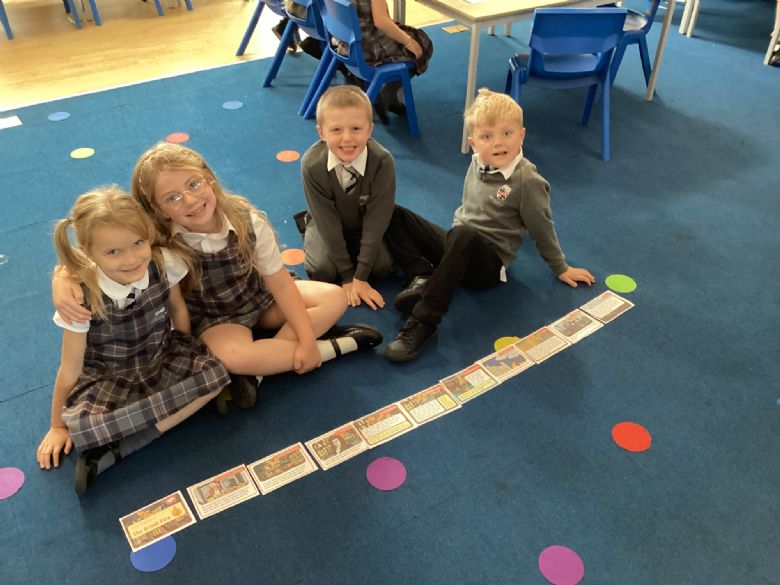
    In History, we enjoyed finding the Great Fire of London on our school timeline and putting the key events in the correct order. This helped us to understand when the fire happened and how the events unfolded over time.