Sparken Hill Academy
History
History
History helps children understand how the world, our country and our own community came to be the way they are, and inspires them to ask questions about the people and events that shaped them.
Intent
Why we teach history
At Sparken Hill, we want our children to be curious about the past and to understand how it shapes their lives today. We want them to know about significant people, events and civilisations, from Britain's earliest settlers to the Second World War, and to understand Britain's place in the wider world.
We also want children to think like historians: to ask questions, weigh up evidence, and understand that the past can be interpreted in different ways. Our own community has a rich history, from Creswell Crags to the coal mines of Worksop, and we use it to bring history to life.
Curious about the past
Children ask questions about people, places and events, and want to find out more.
Secure chronology
Children know where the periods they study fit in time, and how they connect.
Thinking like historians
Children use evidence to reach and explain their own conclusions.
Implementation
How we teach history
History follows the National Curriculum and is taught through our two-year topic cycle. Each unit is linked to a class topic and driven by a key question, such as "Why was the Great Fire of London a significant event?" or "Were the Anglo-Saxons and Vikings invaders or settlers?". Each unit has a small number of clear "to know" statements, reflecting our whole-school approach of Doing Less. Well. and our Golden Thread, where pupils return to the key question and answer it by the end.
What children study, in order of time
Children revisit the timeline in every unit, so they build a secure sense of when each period happened and how periods relate to one another.
- Key Stage 1
- Lower Key Stage 2
- Upper Key Stage 2
- PrehistoryThe Stone Age
- c. 3000 BCAncient Egypt
- Over 2,000 years agoAncient Greece
- AD 43The Romans in Britain
- AD 410The Anglo-Saxons
- AD 793The Vikings
- c. AD 900The Ancient Maya
- 1066Castles and William the Conqueror
- 1666The Great Fire of London
- 1700sThe Industrial Revolution and mining
- 1800sTransport through time
- Victorian eraSeaside holidays in the past
- 1911Explorers and the Poles
- 1939-1945The Second World War
- 1960s-todayToys in living memory
Thinking like a historian
Alongside knowledge of the past, children develop the skills historians use.
- ChronologyPlacing events, people and periods on a timeline.
- Evidence and sourcesUsing artefacts, diaries, photographs and archaeology, and asking how reliable they are.
- Cause and consequenceExplaining why things happened and what they led to.
- Change and continuityComparing life in the past with life today.
- Similarity and differenceComparing societies, such as the Maya and Britain at the same time.
- SignificanceDeciding why some people and events matter more than others.
- InterpretationsUnderstanding that the past can be told in different ways.
- VocabularyUsing words such as empire, invasion, democracy and civilisation accurately.
Big ideas we keep returning to
- Change
- Power
- Empire
- Invasion and settlement
- Democracy
- Exploration
- Technological advances
- Cultural change
Bringing history to life
Trips, visitors and artefacts help children experience history first-hand, often right on our doorstep.
- Creswell CragsStone Age evidence close to home
- Conisbrough CastleA Norman castle built for defence
- National Coal Mining MuseumAnd a visit from local ex-miners
- National Railway MuseumTransport through time
- Weston Park MuseumAncient Egypt Day
- Portals to the PastGreek Day in school
- Roman Day"The Romans Are Coming!"
- Artefact boxesHandling objects from the past
Foundation Stage
In Nursery and Reception, children learn about the past through their own lives and the people around them. They talk about how they have changed, compare past and present through stories, photographs and visitors, and begin to use words such as "old", "new", "then" and "now".
Impact
What children achieve
Teachers assess each unit against its "to know" statements, and children answer the unit's key question at the end, so we can check that knowledge is secure before moving on.
Knowledgeable
Children know about significant people, events and periods, and where they fit on a timeline.
Skilled historians
They ask good questions, use evidence carefully and explain their conclusions using historical vocabulary.
Proud of where they live
They understand how their local area has changed over time, and how the past shapes our community today.
History
History helps children understand how the world, our country and our own community came to be the way they are, and inspires them to ask questions about the people and events that shaped them.
Why we teach history
At Sparken Hill, we want our children to be curious about the past and to understand how it shapes their lives today. We want them to know about significant people, events and civilisations, from Britain's earliest settlers to the Second World War, and to understand Britain's place in the wider world.
We also want children to think like historians: to ask questions, weigh up evidence, and understand that the past can be interpreted in different ways. Our own community has a rich history, from Creswell Crags to the coal mines of Worksop, and we use it to bring history to life.
Curious about the past
Children ask questions about people, places and events, and want to find out more.
Secure chronology
Children know where the periods they study fit in time, and how they connect.
Thinking like historians
Children use evidence to reach and explain their own conclusions.
How we teach history
History follows the National Curriculum and is taught through our two-year topic cycle. Each unit is linked to a class topic and driven by a key question, such as "Why was the Great Fire of London a significant event?" or "Were the Anglo-Saxons and Vikings invaders or settlers?". Each unit has a small number of clear "to know" statements, reflecting our whole-school approach of Doing Less. Well. and our Golden Thread, where pupils return to the key question and answer it by the end.
What children study, in order of time
Children revisit the timeline in every unit, so they build a secure sense of when each period happened and how periods relate to one another.
- Key Stage 1
- Lower Key Stage 2
- Upper Key Stage 2
- PrehistoryThe Stone Age
- c. 3000 BCAncient Egypt
- Over 2,000 years agoAncient Greece
- AD 43The Romans in Britain
- AD 410The Anglo-Saxons
- AD 793The Vikings
- c. AD 900The Ancient Maya
- 1066Castles and William the Conqueror
- 1666The Great Fire of London
- 1700sThe Industrial Revolution and mining
- 1800sTransport through time
- Victorian eraSeaside holidays in the past
- 1911Explorers and the Poles
- 1939-1945The Second World War
- 1960s-todayToys in living memory
Thinking like a historian
Alongside knowledge of the past, children develop the skills historians use.
- ChronologyPlacing events, people and periods on a timeline.
- Evidence and sourcesUsing artefacts, diaries, photographs and archaeology, and asking how reliable they are.
- Cause and consequenceExplaining why things happened and what they led to.
- Change and continuityComparing life in the past with life today.
- Similarity and differenceComparing societies, such as the Maya and Britain at the same time.
- SignificanceDeciding why some people and events matter more than others.
- InterpretationsUnderstanding that the past can be told in different ways.
- VocabularyUsing words such as empire, invasion, democracy and civilisation accurately.
Big ideas we keep returning to
- Change
- Power
- Empire
- Invasion and settlement
- Democracy
- Exploration
- Technological advances
- Cultural change
Bringing history to life
Trips, visitors and artefacts help children experience history first-hand, often right on our doorstep.
- Creswell CragsStone Age evidence close to home
- Conisbrough CastleA Norman castle built for defence
- National Coal Mining MuseumAnd a visit from local ex-miners
- National Railway MuseumTransport through time
- Weston Park MuseumAncient Egypt Day
- Portals to the PastGreek Day in school
- Roman Day"The Romans Are Coming!"
- Artefact boxesHandling objects from the past
Foundation Stage
In Nursery and Reception, children learn about the past through their own lives and the people around them. They talk about how they have changed, compare past and present through stories, photographs and visitors, and begin to use words such as "old", "new", "then" and "now".
What children achieve
Teachers assess each unit against its "to know" statements, and children answer the unit's key question at the end, so we can check that knowledge is secure before moving on.
Knowledgeable
Children know about significant people, events and periods, and where they fit on a timeline.
Skilled historians
They ask good questions, use evidence carefully and explain their conclusions using historical vocabulary.
Proud of where they live
They understand how their local area has changed over time, and how the past shapes our community today.
History: Whole School Journey
Learning from the past to understand the present.
Every history unit sits within a class topic and is driven by an enquiry question. Follow the road from Reception to Year 6 to see the periods, people and places children study, and when in time they happened. E = even year, O = odd year.
Our history units cover
- 👑British history
- 🌍Ancient and world history
- 📍Local history
- 🕰️Changes within living memory
Y5/6O
- AutumnBlitz, Bombs and BritainWhat impact did WW2 have on the lives of the people of Britain?1939-1945👑🌍
- SummerGroovy GreeksWhy was the Greek period so significant?Over 2,000 years ago🌍
Y5/6E
- AutumnIndustrial Revolution and Marvellous MinersHow did the Industrial Revolution transform mining, and what impact did it have on the local area (Worksop)?1700s to today👑📍
- SummerTomb RaidersHow did the Ancient Egyptians shape one of the world’s greatest civilisations - and how do we know?c. 3000 BC🌍
Y3/4O
- SpringRuthless RomansWhat did the Romans do for us - and was it good or bad?55 BC - AD 410👑
Y3/4E
- AutumnRemarkable RainforestsWho were the ancient Maya and what have we learnt from them?c. AD 250-900🌍
- SpringSavage Stone AgeHow did life in Britain change during the Stone Age, and which period would you have rather lived in?Prehistory to the Iron Age👑📍
- SummerRaiders and SettlersWere the Anglo-Saxons and Vikings invaders or settlers?AD 410 - 1066👑
Y1/2O
- AutumnDungeons and DragonsWhy did we need castles, and why don’t we use them today?1066ToysHow has the way we play changed over time?1960s to today👑📍🕰️
- SummerSun, Sea and SandWhy do we love being beside the seaside so much?About 150 years ago🕰️📍
Y1/2E
- AutumnGreat Fire of LondonWhy was the Great Fire of London a significant event and how did it change the city and the lives of the people who lived there?1666👑
- SpringArctic AdventuresWhat would life be like in the Arctic?1820-1912🌍
- SummerPlanes, Trains and AutomobilesHow have inventors helped people travel further and faster?1800s to today🕰️👑
YearR
Reception: the journey starts with the people around us. Children talk about their family and the people in our community, learn why we celebrate Bonfire Night, Diwali and Christmas, and look back at how they have grown and changed since they were a baby.
History Curriculum...
Within our curriculum design the below historical concepts sit at the core to ensure full coverage of each subject.
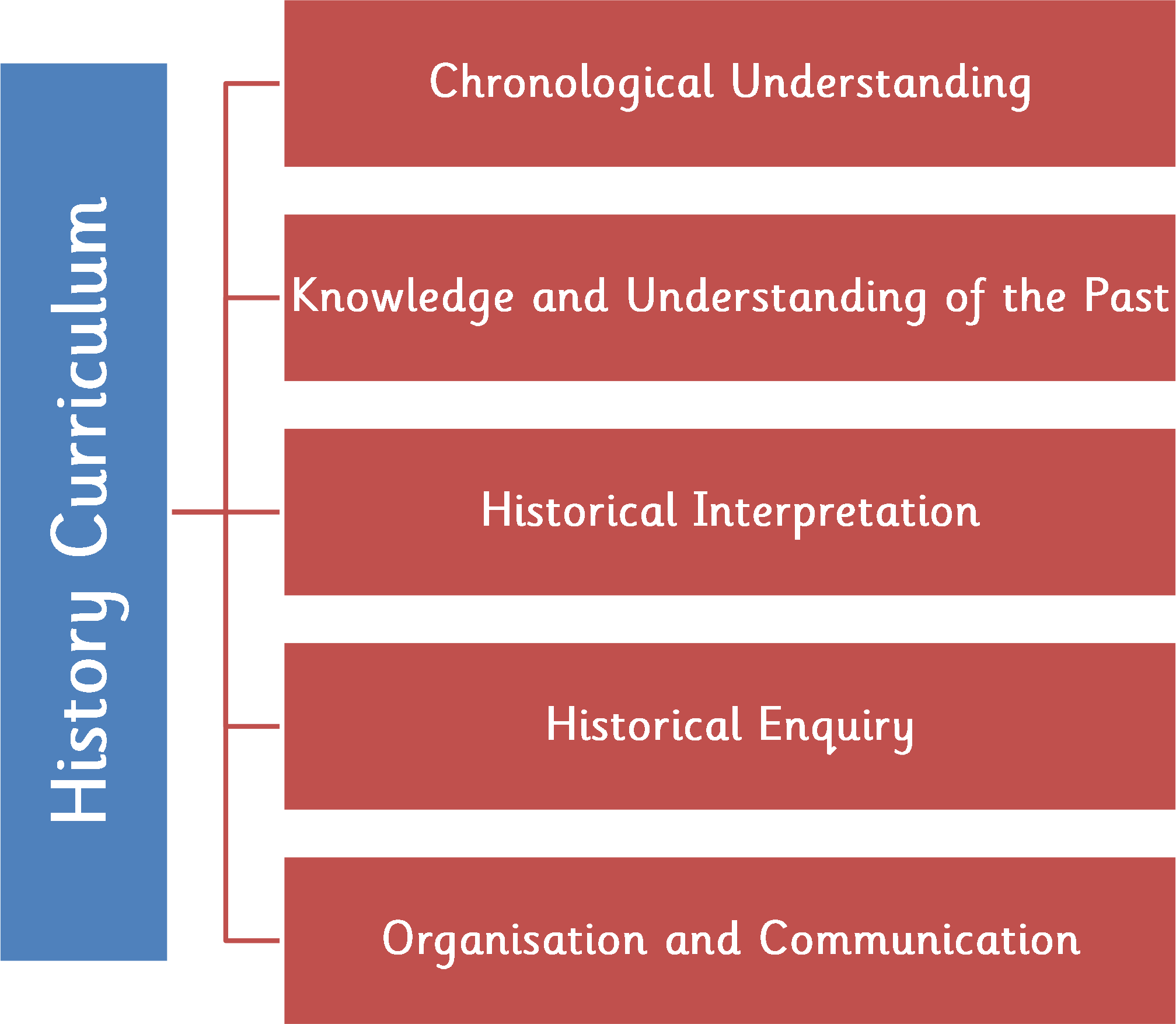
Chronological Understanding
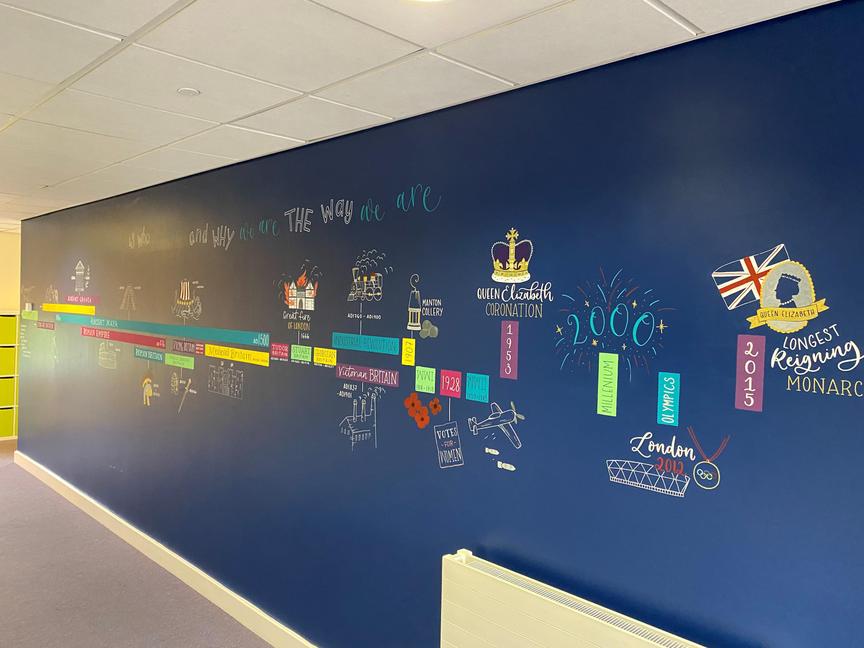
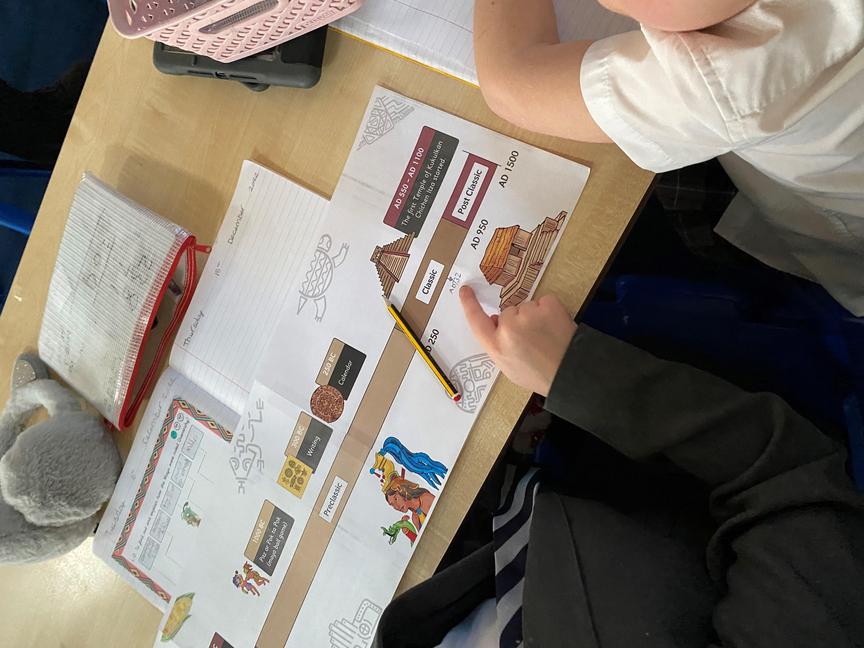
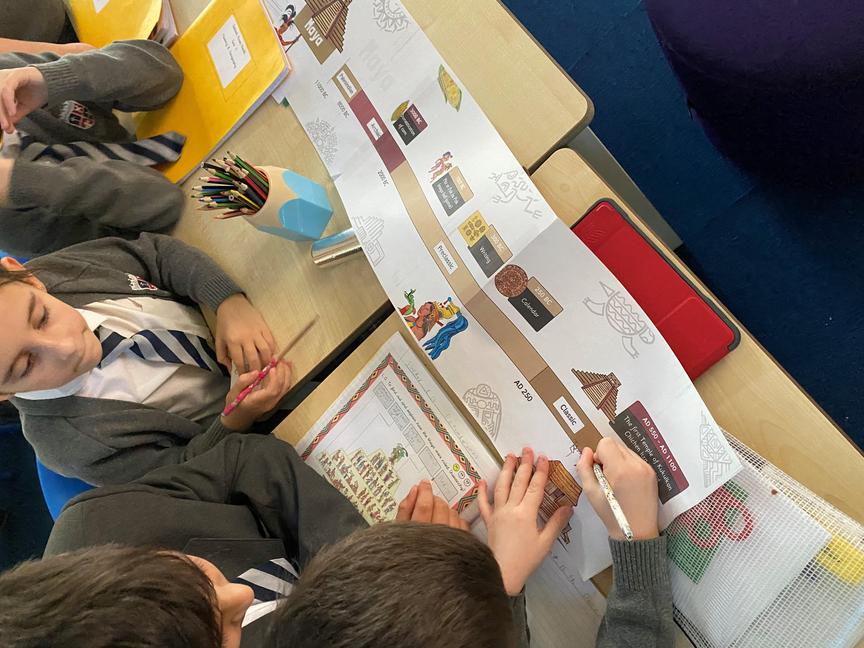
We have our very own bespoke timeline that shows all the topics we study, as well as significant events and people. At the start of every topic each class will visit the timeline to see where the period of history they are studying fits in relation to their prior knowledge, to see the links between events, their sequence and understand the duration of these periods. Using key vocabulary throughout e.g. chronology, decade, century, millennium, event, period, era, BC/AD (BCE/CE).
We also use specific timelines in class as a teaching tool to show the significant events during that period and the part of the era we are studying, this can then be referred back to throughout the term. It helps to embed disciplinary concepts such as ‘Cause & Consequence’ & ‘Similarity & Difference’. For example in Year 3/4 we will use a timeline to place ‘Stone Age tools’ on to show how they have might have changed through the era’s and help to explain why.
Historical Interpretation
We look at a range of primary and secondary sources in order to identify ways how we find out about the past and then make our own interpretations of the past. We can look at concepts like 'continuity & change' and 'similarities and differences'. Handling artefacts allows our pupils to use their senses and strengthen their understanding of different aspects of their topic. It also has allowed pupils to develop questioning and problem solving skills. It allows us to also understand how we learn about the past and evaluate their reliability.


History In Action...
Take a look at our whole school coverage...
Whole School History Journey
We have identified a set of substantive concepts ‘Golden Threads’ that children will revisit more than once through the different topics. For example children will look at concepts such as empire and power in key stage 1 in ''Dungeons & Dragons' looking at 'William the Conqueror' and his invasion of England and then how he was crowned the King. Then in LKS2 we would look more deeply into why the Saxons were defeated by the Normans and why they wanted England so much. Then in UKS2 in World War II we look at the further development of the British Empire & the challenges it faced.
Whole School Curriculum Coverage
This document shows the broad and balanced History topics we teach, which is matched to the 'National History Curriculum objectives'. Where there is a linked Geography unit our planning enables these to run concurrently or previous or following half term to it to allow the strong curriculum links.